 Ammunition Boxes
 Apparel Boxes
 Automotive Boxes
 Candle Boxes
 CBD Boxes
 Cosmetic Boxes
 Ecommerce Boxes
 Electronics Boxes
 Food Boxes
 Game and Sports Boxes
 Gift Boxes
 Jewelry Boxes
 Pharmaceutical Boxes
 PR Boxes
 Retail Boxes
 Soap Boxes
 Stationery Boxes
 Tobacco Boxes
 Straight Tuck End Boxes
 Reverse Tuck End Boxes
 Magnetic Closure Boxes
 Two Piece Boxes
 Shoulder Neck Boxes
 Rigid Drawer Boxes
 Book Style Rigid Boxes
 Collapsible Rigid Boxes
 Tuck Top Boxes
 Display Boxes
 Gable Boxes
 Mailer Boxes
 Autolock Bottom Boxes
 Telescopic Boxes
 Seal End Boxes
 Christmas Gift Bags
 Cosmetic Paper Bags
 Grocery Bags
 Kraft Paper Bags
 Merchandise Bags
 Mylar Bags
 Retail Bags
 Advent Calendar Boxes
 Bookmarks
 Bottle Neckers
 CD Jackets
 Door Hangers
 Ice Cream Cups
 Table Tents
 Tags Printing
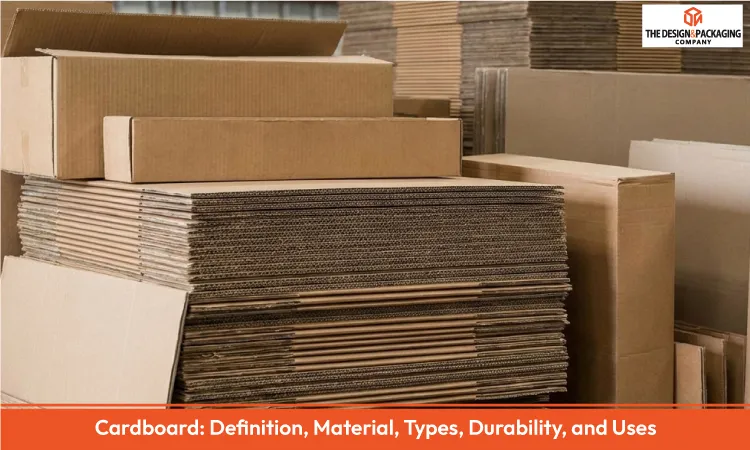
Cardboard comprises multi-ply paper-based materials designed for protection, containment, and transit. Fiber composition determines tensile and tear strength, while board structures, corrugated, folding, or solid, provide cushioning, stacking support, and rigidity. Durability varies with moisture, temperature, and applied load, influencing performance in retail displays, shipping cases, and internal protective inserts. Box costs reflect raw material quality, converting complexity, printing and finishing steps, and production volume. Alternatives such as molded pulp, fluted plastic sheets, and wood crates address higher mechanical demands or specialized environmental requirements. Technical distinctions are guided by flute geometry, liner strength, and ECT ratings to ensure structural integrity and reliability.
- What is Cardboard?
- What is the Material Composition and Structure of Cardboard?
- How is Cardboard Material Used in Packaging?
- What are the Different Types of Cardboard Used in Packaging?
- 1. Corrugated Cardboard: Structure and Variants
- Common Flute Types and Functional Traits
- 2. Folding Boxboard and Graphic Boards
- 3. Solid Board, Greyboard, and Hard Cover Board
- 4. Honeycomb and Foamboard
- What is the Durability of Cardboard Material?
- Key Mechanical Strength Metrics for Cardboard
- Environmental Factors Affecting Cardboard Durability
- Cardboard Longevity, Reuse, and Fatigue Resistance
- What are the Uses of Cardboard in Packaging?
- What is the Manufacturing Flow of Cardboard Packaging?
- Why are Cardboard Boxes Expensive?
- What are the Alternative Materials to Cardboard for Packaging?
- Is Corrugated Cardboard Recyclable and Biodegradable?
- How to Select Cardboard for a Packaging Application?
What is Cardboard?
Cardboard is any multi-ply paperboard material manufactured to provide rigidity, containment, or cushioning for packaging and structural uses. Cardboard includes corrugated board (two liners bonded to a fluted medium), solid board (a dense, multi-ply sheet also known as chipboard or greyboard), and folding boxboard or graphic board (a multi-layered, coated sheet used for printed cartons). Each construction is defined by its constituent components (linerboard, corrugating medium, and coating), as well as by its functional roles, such as load-bearing, display face, or cushioning.
What is the Material Composition and Structure of Cardboard?
Material composition and structure define how cardboard performs in packaging and handling. Cardboard gains strength from cellulose fiber arrangement, the number of plies, and the bonding methods used during manufacture. Core components include linerboard as flat outer layers, corrugating medium as the fluted inner layer in corrugated board, starch-based adhesives for bonding, and optional surface treatments such as coatings or laminates. Fiber sources include virgin long-fiber pulp, which improves tensile and tear strength, and recovered short-fiber material, which increases recycled content. Basis weight expresses material mass in grams per square meter, while caliper measures thickness, helping specify strength and stiffness for folding cartons and corrugated boards.
How is Cardboard Material Used in Packaging?
Cardboard material supports packaging functions at different levels by providing protection, organization, and efficient handling across the supply chain.
- Primary packaging: Cardboard is used for retail folding cartons that directly contain products and support branding and shelf presentation, such as cereal boxes and cosmetic cartons.
- Secondary packaging: Cardboard groups multiple primary packs into multipacks or inner trays, improving handling and distribution through sleeves and partitioned trays.
- Tertiary packaging: Cardboard forms shipping cases and pallet assemblies, where single-wall and double-wall corrugated boxes protect goods during storage and transport.
What are the Different Types of Cardboard Used in Packaging?
Cardboard used in packaging comes in several types, each suited for specific performance, print, and cost requirements. Common commercial types include corrugated board, folding boxboard, solid board (chipboard/greyboard), honeycomb board, foamboard, and specialty graphic boards.
1. Corrugated Cardboard: Structure and Variants
Corrugated cardboard consists of fluted medium sandwiched between flat liners, providing cushioning, compressive strength, and shock absorption. Variants are categorized by wall count and flute geometry:
- Single-wall: One flute and two liners, suitable for general-purpose transit packaging.
- Double-wall: Two flutes and three liners, used for heavier loads or multi-drop shipments.
- Triple-wall: Three flutes and four liners, ideal for industrial or very heavy items.
Common Flute Types and Functional Traits
Common flute types describe how A-, B-, C-, E-, and F‑flutes affect cushioning, stacking resistance, and fold precision. These differences come from flute height, pitch, and medium strength, especially in corrugated boards used for domestic and cross‑border e‑commerce.
- A-flute: Tall profile increases cushioning and vertical compression resistance, used for fragile goods.
- B-flute: Low profile supports frequent folding and high print definition, ideal for retail and shelf-ready packaging.
- C-flute: Medium profile balances cushioning and stacking strength, commonly used in standard transit boxes.
- E- and F-flute: Thin profiles provide smooth print surfaces and compact thickness, suitable for high-graphic cartons and POP displays.
2. Folding Boxboard and Graphic Boards
Folding boxboard (FBB) and solid bleached sulfate (SBS) are engineered for high-quality printing and precise folding. They consist of layered chemical and mechanical pulps with clay-coated surfaces to enhance whiteness and ink holdout. Applications include consumer goods cartons, pharmaceutical packaging, and premium retail packaging.
3. Solid Board, Greyboard, and Hard Cover Board
Solid board, also called chipboard or greyboard, is dense multi-ply recycled fiberboard designed for stiffness at low cost. Common uses include backing boards, internal supports, and book covers. Hard cover boards are manufactured to precise caliper and rigidity standards and often laminated with cloth or paper for finishing.
4. Honeycomb and Foamboard
Honeycomb board uses kraft paper formed into hexagonal cores to provide high bending stiffness with low weight, suitable for protective packaging and furniture panels. Foamboard sandwiches polymer foam between paper facings, providing rigid display panels and structural support for lightweight applications.
What is the Durability of Cardboard Material?
Cardboard durability depends on fiber quality, board construction, environmental exposure, and surface treatments. Mechanical properties such as edge crush resistance, burst strength, puncture resistance, and bending stiffness determine performance under stacking and transit loads. Standard tests like ECT and Mullen help ensure proper strength for packaging applications.
Key Mechanical Strength Metrics for Cardboard
Mechanical performance is measured using standardized tests to predict real-world behavior. Edge Crush Test measures compressive resistance along the board edge and correlates with stacking capacity. Burst or Mullen tests indicate resistance to puncture and hydrostatic pressure. Tensile and tear tests evaluate liner strength for handling and converting operations. Specifying correct ECT or burst ratings ensures safe stacking and transit performance.
Environmental Factors Affecting Cardboard Durability
Moisture and temperature significantly influence fiber strength and reduce compression and tearing resistance. Water absorption softens fibers and lowers edge crush capacity. High humidity causes gradual strength loss and creep under sustained load. Protective coatings or polyethylene lamination restore performance in damp conditions but can affect recyclability and disposal methods.
Cardboard Longevity, Reuse, and Fatigue Resistance
Durability during repeated use depends on handling conditions, moisture exposure, and the quality of the original board construction. Repeated folding gradually reduces stiffness, moisture cycles can weaken adhesive bonds, and abrasion wears printed or coated surfaces over time. Reusable packaging performs best when damaged cartons are removed from circulation, closures remain intact, and storage conditions minimize humidity that accelerates fiber fatigue.
What are the Uses of Cardboard in Packaging?
Cardboard in packaging supports product containment, shock control, merchandising display, and organized shipping by using different flute types and liner strengths that match load, print, and transit requirements; for example, E-flute boards are commonly selected for retail cartons that need sharp print quality, while double-wall corrugated boards are used for heavier products exposed to long shipping cycles.
- Primary Retail Cartons: Cardboard serves as packaging for branded retail products, providing containment and display. Printed folding cartons deliver product information, visual appeal, and structural support for consumer goods.
- Protective Transit Cases: Cardboard functions as shipping and distribution protection. Single-wall and multi-wall corrugated boxes absorb shocks, prevent crushing, and maintain integrity during transport.
- Internal Cushioning and Partitioning: Cardboard provides internal protection to prevent product movement and abrasion. Die-cut inserts, corrugated pads, and partitions separate items and enhance handling safety.
- Point-of-Sale Display Units: Cardboard supports merchandising through display packaging. Shelf-ready trays, floor displays, and promotional units attract consumer attention and simplify stocking and presentation.
- Specialized Packaging Applications: Cardboard enables engineered solutions for product-specific requirements. Tamper-evident closures, micro-corrugated sleeves, and honeycomb panels balance protection, printability, structural strength, and sustainability goals.
What is the Manufacturing Flow of Cardboard Packaging?
The cardboard manufacturing process follows a series of steps that transform raw pulp into finished packaging, with each stage enhancing specific material properties and preparing the board for converting and finishing operations.
- Pulping and refining: Transform raw fibers into furnish and improve tensile strength for liner and medium production.
- Paper formation: Paper machines form liners and corrugating medium, dry the sheets, and wind them into rolls.
- Corrugation and bonding: Heat-form medium into flutes and bond to liners using starch adhesives to create corrugated board, adding bending stiffness.
- Printing: Apply designs or branding using flexographic, lithographic, or digital printing techniques.
- Die-cutting and scoring: Shape boards into required box styles, add fold lines, and prepare panels for assembly.
- Folding and gluing: Assemble sheets into cartons, trays, or other packaging structures.
- Finishing and coating: Apply laminates, varnishes, or surface treatments to improve moisture resistance, scuff protection, and print quality.
Why are Cardboard Boxes Expensive?
Several factors contribute to the cost of cardboard boxes, including raw material prices, production volume, converting requirements, functional features, and logistics. Virgin pulp, specialty liners, and fluctuations in recovered fiber prices can raise board costs, while complex folds, die-cutting, litho-lamination, coatings, and other finishing processes add labor and machine expenses. Short production runs and custom designs also increase the per-unit price because setup and tooling costs are spread across fewer boxes. Additional features such as inserts, tamper-evident closures, and barrier laminates further increase material and processing costs. Energy use during corrugation and drying, along with storage, handling, and transportation, also affects the final landed cost of cardboard packaging. Short-run luxury packaging projects often cost more per unit because custom dies, foil stamping, and specialty coatings require setup time that cannot be distributed across large production volumes.
What are the Alternative Materials to Cardboard for Packaging?
Various materials can replace cardboard in packaging depending on the product, handling conditions, and environmental requirements.
- Plastic Corrugated Sheets: Fluted polypropylene panels provide moisture resistance and durability for reusable logistics applications.
- Molded Pulp: Biodegradable and compostable inserts or trays provide cost-effective cushioning, although they may offer less print detail and dimensional precision than converted paperboard.
- Rigid Plastics: Durable containers support heavy products and repeated-use distribution systems, but their weight, cost, and fossil-based material content should be considered.
- Wood Crates: Strong structures protect oversized or fragile items, although they increase shipping weight, storage requirements, and transport costs.
- Flexible Film-Based Mailers: Lightweight mailers reduce material and freight volume for e-commerce parcels but provide limited crush and impact protection.
Cardboard remains suitable for many retail and shipping applications because it balances printability, structural performance, recyclability, and cost. Alternative materials are generally selected when moisture resistance, high load capacity, compact shipping, or repeated reuse is more important than rigid fiber-based construction.
Is Corrugated Cardboard Recyclable and Biodegradable?
Corrugated cardboard is generally recyclable and biodegradable when it is free from non-fiber coatings, waxes, laminates, and other contaminants. In standard paper recycling systems, used cardboard is baled, pulped, screened, and processed into new paper products, although food residue, grease, or laminated layers can reduce fiber quality. Recovered fibers are often blended with virgin pulp to maintain the strength required for products such as testliner and corrugating medium. Uncoated corrugated cardboard also biodegrades naturally in composting environments or soil, whereas coated, laminated, or wax-treated boards decompose more slowly and may require additional processing before fiber recovery. To improve end-of-life performance, packaging designers typically minimize non-fiber laminates, use water-soluble adhesives where appropriate, and clearly identify multi-material packaging to support proper recycling and disposal.
How to Select Cardboard for a Packaging Application?
Selecting cardboard for a packaging application requires aligning board properties with product protection, handling conditions, and presentation needs. After identifying stacking, drop, and transit conditions, packaging teams can compare board grades and prototype options to confirm real-world performance before production. Surface finishes, coatings, or laminates enhance print quality, branding, and visual appeal, while environmental resistance measures such as moisture or grease barriers ensure durability under specific conditions. Prototyping and short-run testing help validate performance, particularly when adjusting flute type, wall count, or material composition, reducing the risk of failure in actual use.